.jpeg)
The 2026 Reality Check
Setting up an office in 2026 is very different from even a few years ago. The Indian commercial real estate market is expanding rapidly, but so are rental costs, labor expenses, and execution timelines. Whether you are a startup founder, a growing SME, or a facility manager handling large teams, one challenge dominates every decision: Time to Occupancy.
For decades, Indian offices followed a familiar pattern—hire a local carpenter, buy plywood from the market, and convert the office site into a temporary workshop. It felt economical. It felt “custom.”
At Ask Systems India Pvt. Ltd., we analyze workspace projects across industries and cities. Based on current material pricing, labor trends, and real estate economics, one conclusion is clear: carpenter-made desks are no longer a cost-effective solution. In fact, they often become a hidden financial liability.
This analysis explains why modular workstations have become the standard for modern offices in 2026, and how the illusion of “cheap carpentry” can cost businesses significantly more in the long run.
The Real Cost of “Cheap” Carpentry in 2026
Most decision-makers compare only raw material prices. A plywood sheet looks affordable, and a rough estimate suggests a desk can be built cheaply. But this approach ignores the total cost of ownership.
Why the Sticker Price Is Misleading
When you choose on-site carpentry, you are paying for far more than wood:
Retail material pricing: Carpenters source materials at retail rates, while modular manufacturers procure directly from factories at wholesale prices.
High material wastage: Manual cutting leads to 15–20% wastage. Factory CNC processes reduce this to under 3%.
Rising labor costs: Skilled carpenters are increasingly scarce, driving daily wages higher across Indian cities.
Unaccounted overheads: Delays, rework, site supervision, and dependency on multiple trades add invisible costs.
What appears inexpensive on paper becomes expensive in execution.
The Rent Wastage Factor: The Hidden Loss
The most overlooked cost in carpentry-based furniture is lost rental value.
A typical office setup using on-site carpentry can take 45–60 days to complete. During this period, rent is paid on an unusable space—often before teams can even move in.
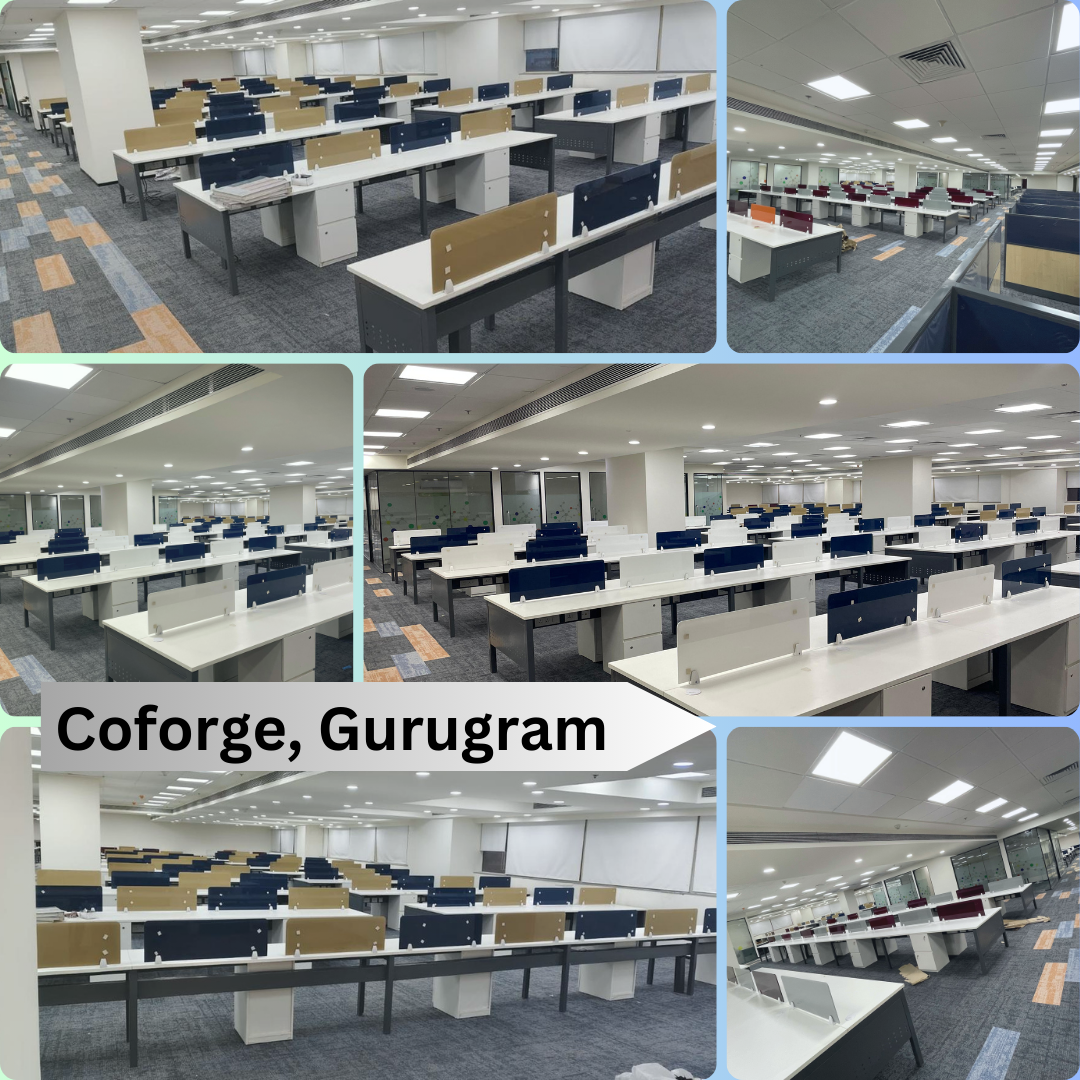
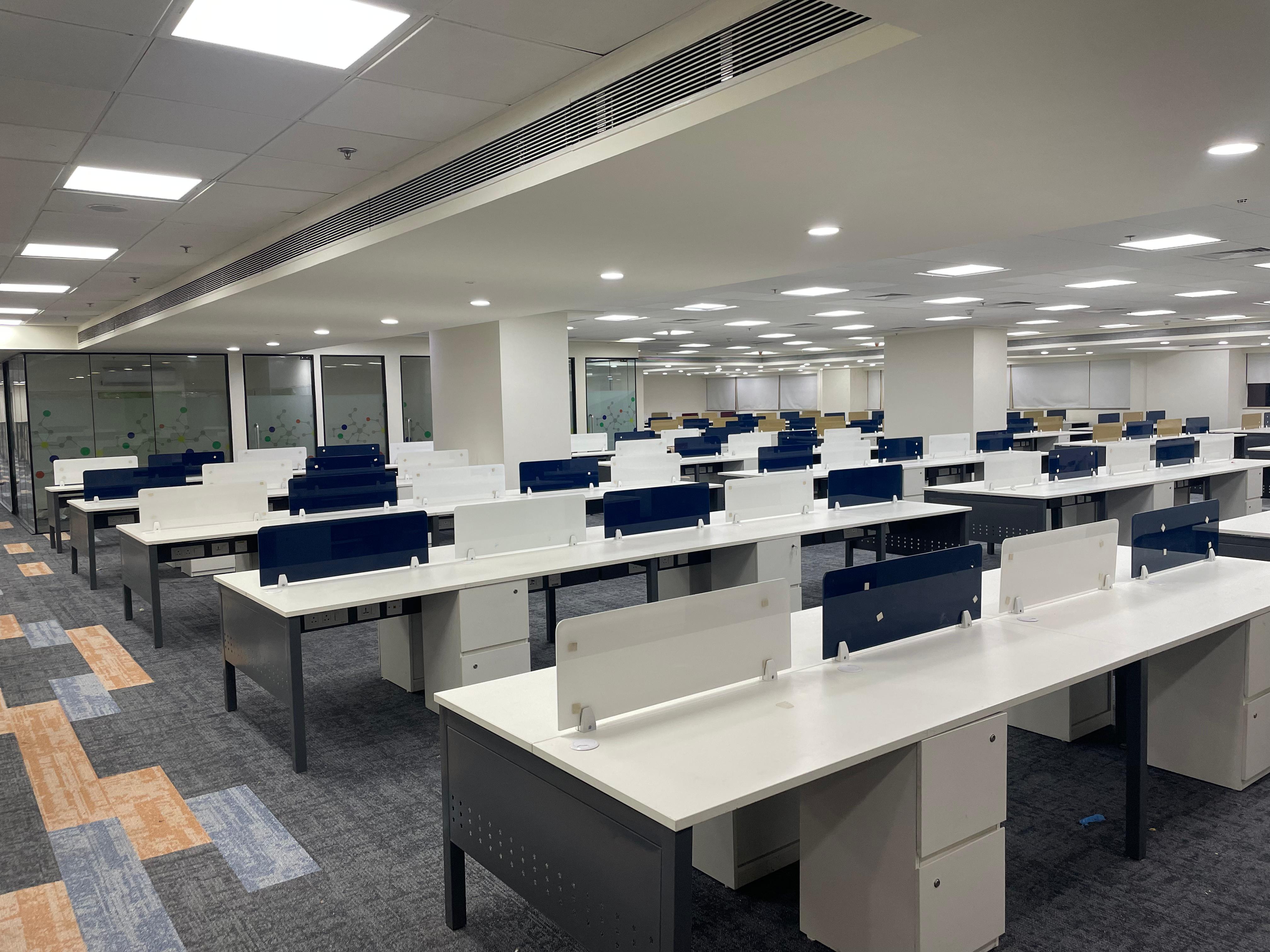
With modular workstations, manufacturing happens in parallel with interior work. Installation typically takes 3–5 days once the site is ready.
The difference often results in months of saved rent, which alone can offset a substantial portion of the furniture investment.
Quality & Durability: Why Material Choice Matters
Not all modular furniture is created equal. Low-quality modular systems using particle board often fail in Indian conditions.
Why Particle Board Fails Over Time
Particle board absorbs moisture easily. In humid or monsoon-prone environments, it swells, weakens screw joints, and becomes irreparable within a few years. Once damaged, replacement is the only option.
The Ask Systems Hybrid Approach
At Ask Systems India Pvt. Ltd., we advocate a steel + plywood hybrid workstation system:
Steel framework: Powder-coated mild steel structures resist termites, moisture, and wear, offering long service life.
BWR or high-density plywood surfaces: These handle spills, humidity, and heavy equipment far better than particle board.
This combination delivers the speed of modular systems with the durability expected from long-term business assets.
Learn more about our modular workstation systems here:
https://asksystems.in/modular-workstations
Time & Efficiency: On-Site Chaos vs Factory Precision
The Challenges of On-Site Carpentry
Dust damages HVAC systems before occupancy
Noise disrupts meetings, hiring, and inspections
Work depends on multiple vendors, increasing delays
Quality varies based on individual skill and site conditions
The Modular Advantage
Modular workstations are manufactured using parallel processing. While steel frames are fabricated, panels are cut, edged, and finished simultaneously in controlled factory environments.
Key benefits include:
Machine-applied edge banding for moisture resistance
Precision drilling for smooth drawer and slide operation
Consistent quality across large installations
2026 Cost Comparison: A Reality-Based View
When evaluated across material cost, labor, rent loss, wastage, tax efficiency, and resale value, modular workstations consistently outperform carpenter-made desks.
Lower effective cost over the furniture lifecycle
Faster return on investment
Retained asset value instead of demolition waste
In most real-world scenarios, modular office workstations reduce overall setup costs while improving operational readiness.
Explore scalable office workstation solutions:
https://asksystems.in/office-workstations
Aesthetics, Technology & Future-Proofing
Cable Management
Carpenter-made desks often rely on drilled holes and exposed wiring. Modular workstations integrate concealed raceways and vertical risers, improving safety, aesthetics, and maintenance.
Scalability
When teams grow:
Carpenter-made furniture requires fresh on-site work, dust, and disruption.
Modular systems allow seamless expansion using matching add-on units with minimal downtime.
Customizable modular solutions are available here:
https://asksystems.in/custom-workstations
The Custom Furniture Myth
“Custom” is often misunderstood.
Overly complex desk shapes waste space, limit flexibility, and restrict future changes. Standardized modular dimensions are designed for space efficiency, allowing businesses to accommodate growth without increasing rent.
True customization lies in configuration, not permanent shapes.
Environmental & Compliance Considerations
In 2026, sustainability is no longer optional.
On-site carpentry often uses solvent-based adhesives with high VOC emissions.
Modular manufacturing uses controlled processes, low-emission materials, and repairable components.
Modular furniture aligns with circular economy principles—assets move with the business instead of ending up in landfills.
Final Verdict: Which Is Right for Your Office?
If furniture is viewed as a short-term expense, carpentry may seem familiar.
But if furniture is seen as a business asset—one that saves rent, improves productivity, ensures safety, supports growth, and retains value—modular workstations are the clear choice for 2026.
At Ask Systems India Pvt. Ltd., we design and manufacture modular workstations that help businesses move faster, scale smarter, and work better.
Furniture? Just Ask.