Office Expansion Furniture Planning 2026 | Modular Office Solutions | Modular Furniture
In this article
- Office Expansion in 2026: How to Plan Modular Office Furniture for Growing Teams
- Office Expansion Trends in 2026: Why Furniture Planning Matters
- 1. Plan Office Furniture According to Current and Future Headcount
- 2. Choose Modular Workstations That Can Expand with Your Team
- 3. Design Flexible Seating for Hybrid and Growing Teams
- 4. Select Ergonomic Office Chairs for Employee Comfort
- 5. Allocate Space for Conference Rooms and Collaboration Areas
- 6. Plan Storage Alongside Workstations
- 7. Match Furniture Procurement with the Office Move-In Schedule
- 8. Consider Delivery and Site Logistics Before Ordering
- 9. Prepare a Practical Office Furniture Budget
- Why Choose ASK Systems India Pvt. Ltd. for Office Furniture?
- Final Thoughts: Plan Your Office Expansion Before the Move
- Frequently Asked Questions
Office Expansion in 2026: How to Plan Modular Office Furniture for Growing Teams
Business growth often brings new workplace requirements. As companies hire more employees, establish new departments or move into larger commercial spaces, their existing office furniture may no longer meet operational needs.
An office expansion is therefore more than a matter of adding desks and chairs. Businesses need to consider workspace planning, employee capacity, workstation configurations, storage, meeting areas and future flexibility.
In 2026, companies are increasingly looking for practical ways to furnish expanding offices without compromising space utilisation, employee comfort or professional appearance. Modular office furniture can help businesses plan workspaces that adapt to changing team sizes and operational requirements.
Whether you are setting up a new corporate office, expanding an existing floor or planning a commercial office relocation, choosing the right furniture in advance can make the process more organised.
ASK Systems India Pvt. Ltd. offers office furniture solutions for modern workplaces, including modular workstations, ergonomic chairs, conference tables and executive furniture.
Office Expansion Trends in 2026: Why Furniture Planning Matters
Office expansion and commercial real estate activity influence how businesses approach workplace planning.
According to Knight Frank India's H1 2026 real estate report, Pune recorded 6.6 million sq. ft. of office transactions during the first half of 2026, representing a 29% year-on-year increase.
Cushman & Wakefield separately reported 3.22 million sq. ft. of gross office leasing in Pune during Q2 2026, taking its H1 2026 leasing figure to 5.31 million sq. ft.
These figures use different measurement methodologies, but both reports indicate strong office leasing activity in Pune.
Sources:
Knight Frank H1 2026 market report: https://www.knightfrank.co.in/
Cushman & Wakefield Pune MarketBeat: https://www.cushmanwakefield.com/en/india/insights/marketbeat-india/pune-marketbeat
For businesses planning an expansion, the practical lesson is clear: furniture requirements should be considered early in the office planning process rather than after the new space is ready.
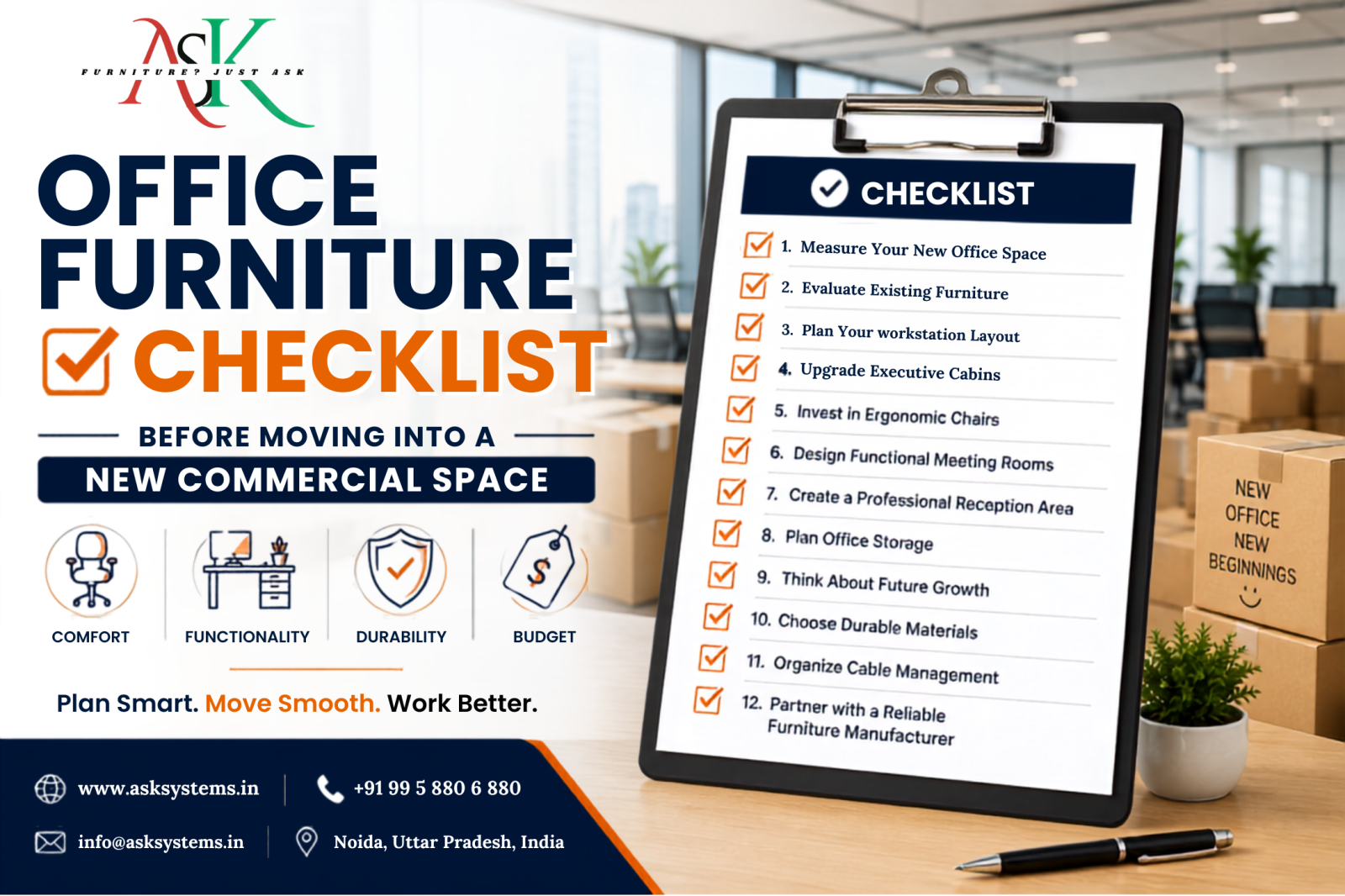
1. Plan Office Furniture According to Current and Future Headcount
One of the most common challenges during office expansion is estimating how many workstations and seating arrangements will be required.
A business may initially plan for 40 employees but expect its workforce to grow to 60 or 70 over the next year. Purchasing furniture only for the immediate requirement may result in additional procurement and layout changes later.
Before finalising furniture requirements, consider:
Current employee strength.
Expected recruitment over the next 6–12 months.
Department-wise seating requirements.
Hybrid and shared seating arrangements.
Managerial and executive seating.
Meeting room and visitor capacity.
Prepare two estimates: the number of seats required immediately and the expected seating requirement after expansion.
This approach can help businesses plan their furniture investment more effectively.
2. Choose Modular Workstations That Can Expand with Your Team
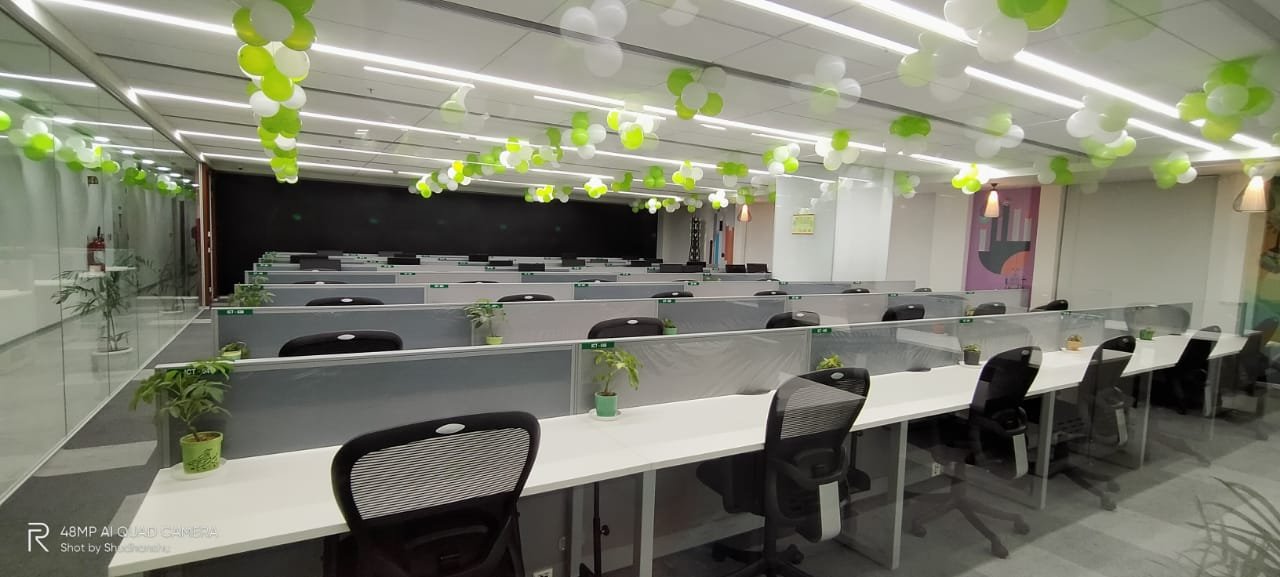
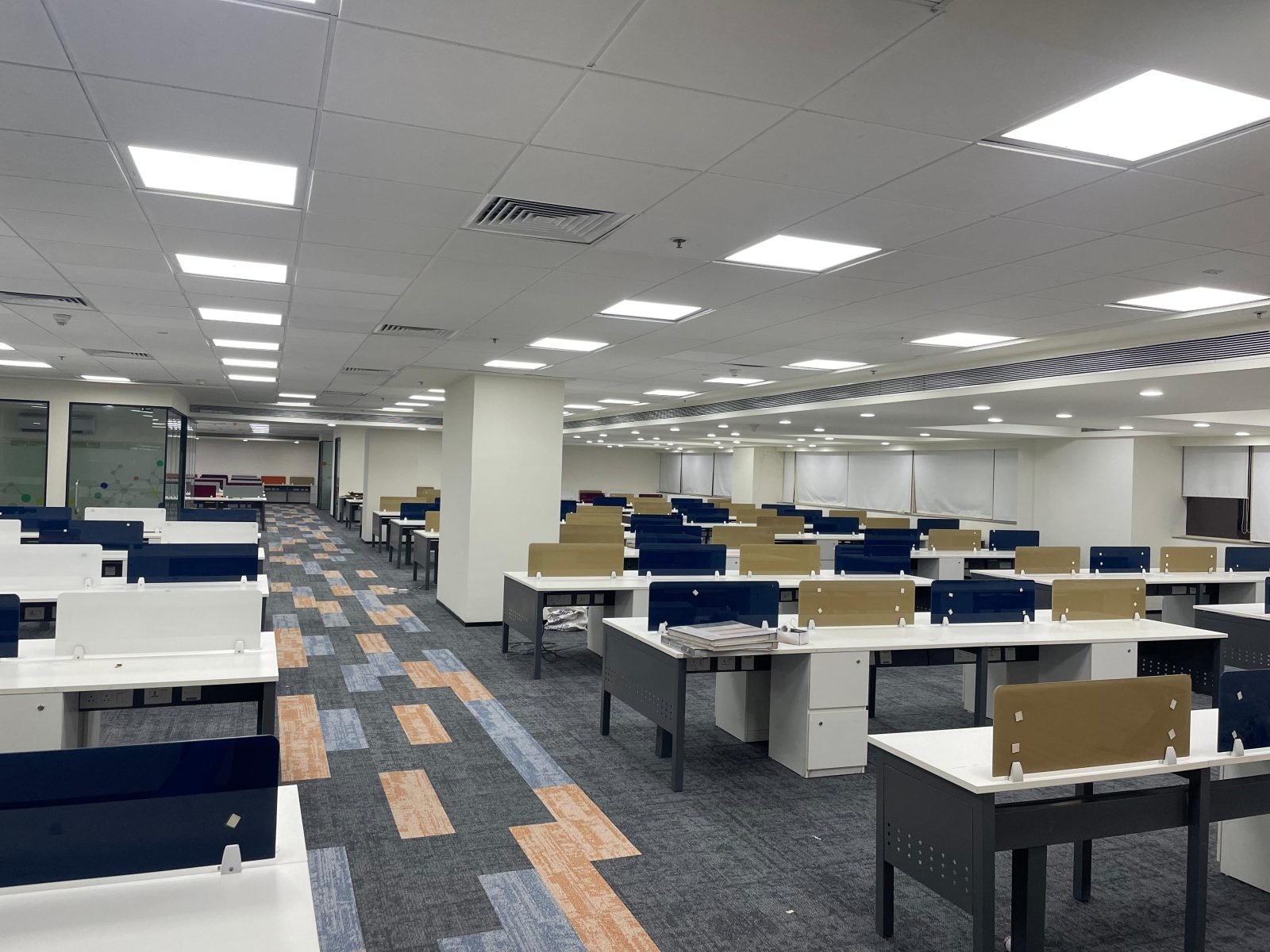
Modular workstations are particularly useful when businesses expect their office layout or employee strength to change.
Unlike a layout based entirely on fixed, independent desks, a modular workstation system may allow compatible units to be added, rearranged or reconfigured according to the selected design.
Important considerations include:
Workstation dimensions and configurations.
Partition and privacy panel requirements.
Storage and drawer arrangements.
Cable management provisions.
Desk finishes and materials.
Compatibility between existing and additional units.
For example, a company expanding its operations department may need additional workstation bays that match its existing furniture.
Selecting a consistent modular furniture system can help maintain a uniform appearance across different office sections.
Explore modular workstations from ASK Systems for modern office workstation requirements.
You can also read our guide to custom modular office workstations in India.
3. Design Flexible Seating for Hybrid and Growing Teams
Not every employee needs an individually assigned workstation throughout the working day. Depending on the organisation's working model, shared desks and flexible seating arrangements may help businesses use office space more efficiently.
Before introducing shared seating, evaluate:
Employee attendance patterns.
Departmental coordination requirements.
Individual storage needs.
Availability of power and network connections.
Cleaning and maintenance arrangements.
Ease of adjusting workstation layouts.
For companies with hybrid working arrangements, a combination of assigned desks, shared workstations and collaborative spaces may be more appropriate than a single seating model.
The furniture layout should reflect how employees actually use the office rather than simply maximising the number of desks.
4. Select Ergonomic Office Chairs for Employee Comfort
Office expansion should not focus only on increasing the number of seats. Employee comfort and suitable seating should also be considered.
When purchasing office chairs in larger quantities, businesses should evaluate:
Adjustable seat height.
Lumbar and back support.
Seat cushioning.
Armrest adjustment.
Breathable upholstery or mesh.
Durability and maintenance requirements.
Different departments may have different seating requirements depending on working hours and daily activities.
For example, employees who spend most of their day at computer workstations may require different seating features from visitors or employees who attend shorter meetings.
Explore ergonomic office chairs from ASK Systems.
For more guidance, read our article on how to choose the best executive chair for long working hours.
5. Allocate Space for Conference Rooms and Collaboration Areas
Growing businesses often need more than additional employee desks. As teams expand, they may require additional meeting rooms, discussion spaces and collaborative areas.
A well-planned office expansion should account for:
Conference tables and meeting room seating.
Small discussion tables.
Client meeting areas.
Training and presentation spaces.
Shared collaboration zones.
Visitor seating.
The dimensions of conference tables and the number of chairs should be determined by room capacity and the expected number of meeting participants.
Businesses should also plan sufficient movement space around tables and ensure that electrical connections and presentation equipment are accessible.
Read our guide to trending office table designs in India for modern workspaces.
6. Plan Storage Alongside Workstations
Office expansion can increase the requirement for documents, stationery, equipment and shared resources.
If storage is not considered during furniture planning, workstations may become cluttered and common areas may be used inefficiently.
Consider incorporating:
Office storage cabinets.
Under-desk storage units.
Department-wise storage.
Document cabinets.
Shared equipment storage.
Lockers where required.
Storage requirements should be calculated according to the type of business, the number of employees and the materials used in daily operations.
A coordinated storage plan can help keep the expanded office organised and functional.
7. Match Furniture Procurement with the Office Move-In Schedule
Furniture procurement should be coordinated with the office construction, fit-out and relocation schedule.
Ordering furniture too late may create delays, particularly when the project involves multiple workstation units, custom dimensions or coordinated furniture finishes.
A practical procurement sequence can include:
Stage 1 – Space assessment: Review the floor plan, usable area, columns, electrical points and access routes.
Stage 2 – Furniture planning: Decide the workstation layout, seating capacity, meeting areas and storage requirements.
Stage 3 – Specifications: Finalise dimensions, materials, finishes, quantities and product configurations.
Stage 4 – Quotation and approval: Review the commercial proposal and confirm the scope of supply.
Stage 5 – Delivery planning: Coordinate manufacturing or sourcing schedules, transportation, unloading and site access.
Stage 6 – Installation and inspection: Check furniture placement, stability, alignment and overall finish before occupation.
The exact sequence and lead time will depend on the project size, furniture specifications and site conditions.
8. Consider Delivery and Site Logistics Before Ordering
Large office furniture projects involve more than product selection. Delivery and installation logistics can influence the overall project schedule.
Before placing an order, confirm:
Building delivery permissions.
Lift dimensions and loading capacity.
Loading and unloading arrangements.
Site access and working-hour restrictions.
Floor-wise delivery requirements.
Furniture installation responsibilities.
Packaging disposal and site clearance.
For offices in commercial towers, these details should be checked before the delivery date is finalised.
Early coordination can help reduce last-minute complications during office relocation or expansion.
9. Prepare a Practical Office Furniture Budget
Furniture expenditure can become difficult to manage when requirements are added gradually without a consolidated plan.
A structured budget should account for:
Modular workstations.
Employee and executive chairs.
Conference room furniture.
Reception furniture.
Storage cabinets.
Installation and transportation.
Additional furniture for planned expansion.
It is also useful to distinguish between essential furniture requirements and optional upgrades.
Businesses should compare quotations based on specifications, materials, dimensions, quantities, delivery terms and installation scope.
For additional planning guidance, read our article on the cost-effective advantages of modular office furniture in Noida.
Why Choose ASK Systems India Pvt. Ltd. for Office Furniture?
Selecting an office furniture supplier or manufacturer is an important part of planning a new or expanding workplace.
Businesses should evaluate product suitability, furniture specifications, available configurations, quality requirements, commercial terms and delivery arrangements before making a decision.
ASK Systems India Pvt. Ltd. offers office furniture solutions for modern commercial workspaces.
Its product range includes:
Modular office workstations.
Ergonomic office chairs.
Conference tables.
Reception desks.
Manager tables.
Director tables.
Whether you are furnishing a new office, adding workstations to an existing floor or upgrading your corporate workspace, you can explore the ASK Systems website to review its furniture offerings.
Businesses looking for a modular office furniture manufacturer in Noida can contact ASK Systems to discuss their office furniture requirements.
Final Thoughts: Plan Your Office Expansion Before the Move
Office expansion creates an opportunity to improve workspace organisation, employee seating, storage and meeting facilities.
The right modular office furniture plan can help businesses prepare for current requirements while allowing room for future changes. Workstation configurations, ergonomic chairs, conference furniture and storage should all be considered together rather than purchased as unrelated items.
Planning furniture specifications and procurement timelines before the move-in date can also help businesses manage installation and site coordination more effectively.
If your business is planning a new office or expanding an existing workspace, explore the office furniture solutions offered by ASK Systems India Pvt. Ltd.
Planning an office expansion or new workspace?
Visit https://asksystems.in/ or contact ASK Systems at +91 99588 06880 to discuss your office furniture requirements.
Frequently Asked Questions
1. What furniture is required for an office expansion?
Most office expansions require additional workstations, employee chairs, storage units and meeting room furniture. Depending on the office layout, reception desks, executive tables and visitor seating may also be required.
2. Why is modular office furniture suitable for growing businesses?
Modular office furniture can offer flexibility through compatible components and configurable layouts. Depending on the system, businesses may be able to add workstation units or rearrange existing furniture as requirements change.
3. How do I calculate the number of workstations required?
Start with current employee strength, department-wise seating requirements and expected recruitment. Also account for shared desks, hybrid working arrangements, meeting rooms and circulation space.
4. When should office furniture be ordered during an office expansion?
Furniture planning should begin during the space-planning and fit-out stage. Final specifications and procurement schedules should be coordinated with the building's move-in date, site access and installation requirements.
5. What should I check before purchasing modular workstations?
Review workstation dimensions, materials, finishes, partitions, storage, cable management, durability and compatibility with future additions.
6. Which office chairs are suitable for long working hours?
Look for chairs with suitable adjustability, back support, seat cushioning and materials appropriate for daily use. The final choice should reflect employee requirements and workstation dimensions.
7. How can businesses manage office furniture costs during expansion?
Prepare a consolidated furniture requirement list, prioritise essential products, compare like-for-like quotations and plan future expansion requirements before purchasing.
8. Where can I find modular office furniture in Noida?
You can explore ASK Systems India Pvt. Ltd. for modular workstations, ergonomic office chairs, conference tables, reception desks and other office furniture solutions.
Visit https://asksystems.in/ to learn more.
Need furniture for your office?
ASK Systems manufactures modular office furniture in Noida. Get free consultation and a detailed quotation for your space.